
INMAX product and drawing — MS866-40-A-2 panel lock / MS866-40-A-2 dimensional drawing
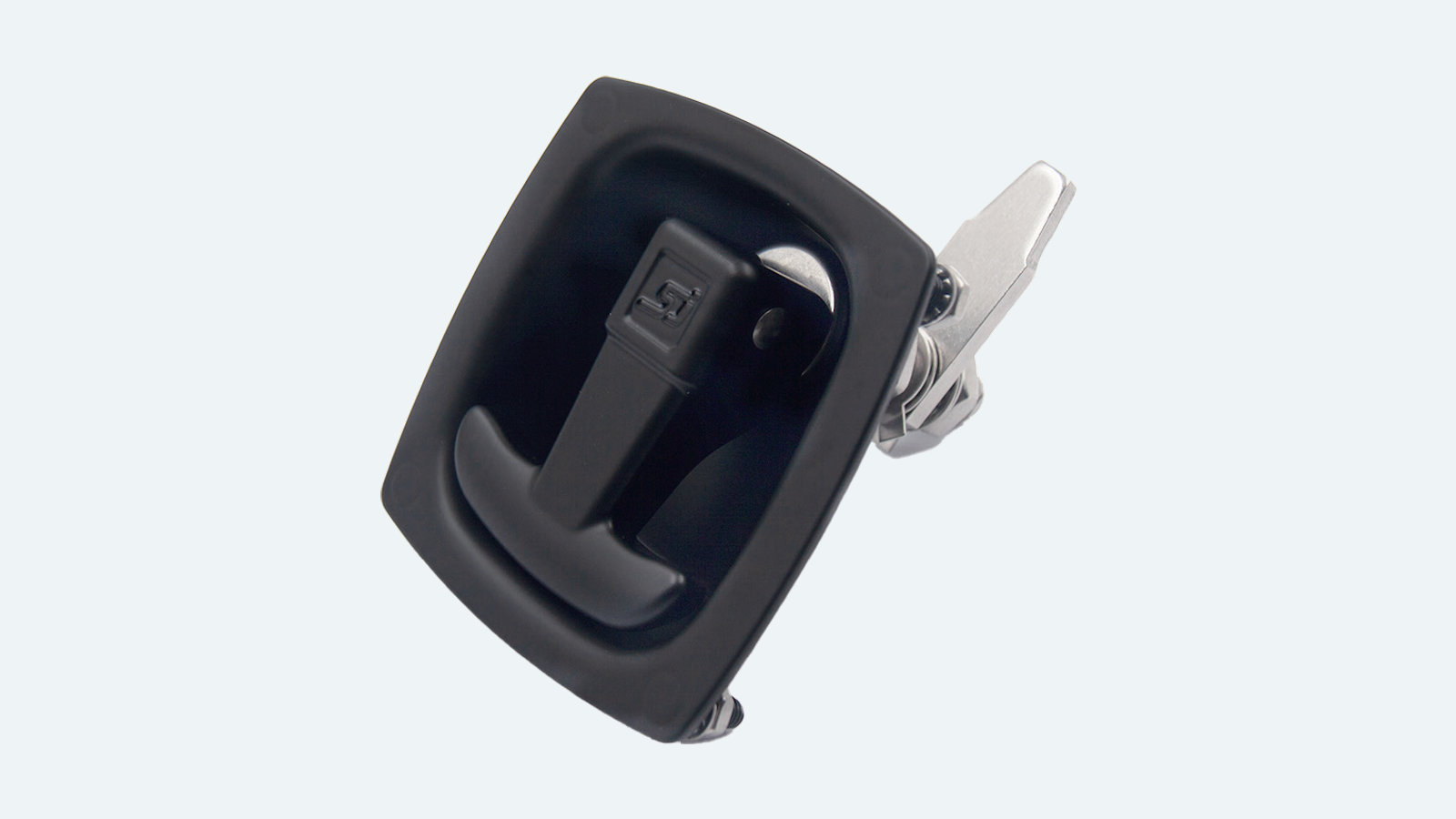
Which industrial cabinet lock would you buy for a replacement door, a narrow service aisle, or a tall gasketed enclosure? Those jobs can start with the same catalogue and end with different hardware. This second buying guide follows each door through to a shortlist, the drawing to request and the point to verify on the sample. Part 1 covers the lock families and the measurements they share. For a door with an existing cutout, the MS866-40-A-2 panel lock gives you a specific model drawing to measure against.
The cabinet lock types below address four different purchasing conditions. Use these examples to narrow the enclosure locks you will put on the quotation. Jump to buyer FAQs / Product pages and sources.
Replacing a lock in an existing cutout
Start with the hole that already exists. Record its shape, mounting flats and fixing holes, then measure the material trapped under the mounting nut or bracket. Close the door and mark where the cam touches the keeper. A latch with the same outline on the front may leave its cam short of the frame.
The MS866-40-A-2 panel lock names cam S1W48Y00001 and gives an H dimension of 43–58. Use the reference faces on the MS866-40-A-2 model drawing to interpret H. The MS982-2 instead lists a retractable action and an adjustable H of 29–53 mm. A shared dimension letter leaves the cutout, cam motion and keeper engagement to be checked individually.
Buying for an access panel beside an aisle
Mark the nearest obstruction on a side view. If the closed handle can catch clothing or strike an adjacent door, start with a flush handle. Then make room for the operator’s fingers and the complete handle movement. On MS723-3, for example, the side view shows a handle lifting 45° and the face view shows 90° rotation. A handle can sit flush when closed and still need room in front to open. Check the operating clearance on a flush cabinet lock.
A small removable panel with one keeper presents a different choice. A quarter-turn MS715 is a candidate when a single cam can reach the frame and clear it again. Order the hand and cam reference against the actual panel sketch. Specify the cam’s turning direction.
Buying for a tall door with a perimeter gasket
Mark where the gasket loses contact with the door closed. If the design calls for engagement at the top and bottom, draw the rod paths, guides and keepers as well as the centre actuator. On the MS840-14 rod-control model, the handle operates a drive-housing assembly. Ask the supplier to identify which rods, guides and frame fittings are included in the quotation. The finished door sample can then be checked at all planned contact points.
For a cabinet specified to an IP rating, obtain evidence for the intended enclosure assembly, including the panel cutout, gasket and installed hardware. The model-specific IP65 entry on MS840-16-F is one input to that review. IEC 60529 defines the IP Code for enclosures.
Ordering keyed locks for a cabinet fleet
Group the doors by who needs access. If you are quoting the INMAX MS758-5-Z cylinder lock, put the required key group beside each door ID and ask which keying arrangements are available for that model. Spell out which doors should share a key on your order.
Which cabinet lock requirement comes first when two apply?
A real door can fit more than one of the four cases. Resolve the feature that is fixed, then ask for evidence on the second requirement.
- Existing cutout beside a narrow aisle
- Screen the candidate against the existing hole and mounting stack first. Draw the full sweep of the flush handle against the nearest obstruction before ordering a sample.
- Tall gasketed door with keyed access
- Mark the frame contacts and rod paths on the door drawing. Carry the same actuator reference into the keying schedule so the supplier quotes the access arrangement for that drive.
- Replacement door in a keyed fleet
- Give the old cylinder group and the proposed lock model on the same order line. Ask who will verify the existing key and the replacement cam on the sample door.
Compare the quotations against the job
| Door or purchasing condition | What the supplier should identify | Sample acceptance check |
|---|---|---|
| Existing hole must stay | Cutout, mounting stack, exact cam and working H dimension. | Seat the latch in the existing preparation and check frame engagement. |
| Restricted front access | Closed projection, lift path and hand clearance. | Operate the handle with the adjacent door or obstruction in place. |
| Several closure points | Actuator, rod lengths and interfaces, guides, keepers and fixings. | Check each closure point with the intended gasket fitted. |
| A fleet of keyed cabinets | Door group, cylinder arrangement, keys per group and spare-key quantities. | Check the agreed access groups against the receiving schedule. |
Product pages and technical references
Industrial cabinet lock buying FAQ
Is a quarter-turn cam latch suitable for every small access panel?
It is a practical starting point for a panel that needs one engagement point. Check the mounting hole, keeper overlap and space for the cam’s sweep. If the door needs a defined pull-up action against a seal, have the supplier identify and document that action for the exact latch.
Can I order by the H dimension alone?
Match the drawing’s reference faces, the cam part number and the attitude of the closed door. H can refer to a different geometry on another model. The panel lock grip and cam reach guide shows the two views needed to compare them.
When does a rod-control lock make sense?
Consider it when the design calls for spaced closure points operated by one handle. Establish the number and positions of the keepers before ordering rods and guides. Door height alone does not establish the required number of points. Check the rod-control assembly list.
How should I choose between a key, a tool insert and a hand-operated latch?
Write down who needs routine access and what they will carry. A shared service tool, a controlled key group and a door opened by hand call for different access arrangements. Ask which option the supplier can provide on the selected mechanical assembly.
Can one key serve a whole row of cabinets?
Specify keyed-alike groups only for doors that the same people should access. Assign each group a reference, state the number of operating and spare keys required, and confirm availability on the chosen cylinder. Prepare a cabinet lock keying schedule.
Does a rated lock establish the IP rating of my cabinet?
The installed enclosure needs its own supporting evidence. Ask what was tested, including the gasket, door, cutout and installation conditions. Keep the lock’s individual rating attached to its exact part number.
What belongs in a sample order for a replacement?
Include the exact latch, rear cam or drive, mounting hardware, key or tool, and the drawing revision. Identify the door used for the fit check. A front photograph and a model family name leave several of those decisions open.
How do I compare two quotes with different prices?
Put the same quantities and assembly items side by side. A quotation for the handle and housing alone can omit rods, keepers or keys that another supplier included. Mark unresolved items before releasing the order. Use the cabinet lock RFQ checklist or send INMAX your door drawing.