
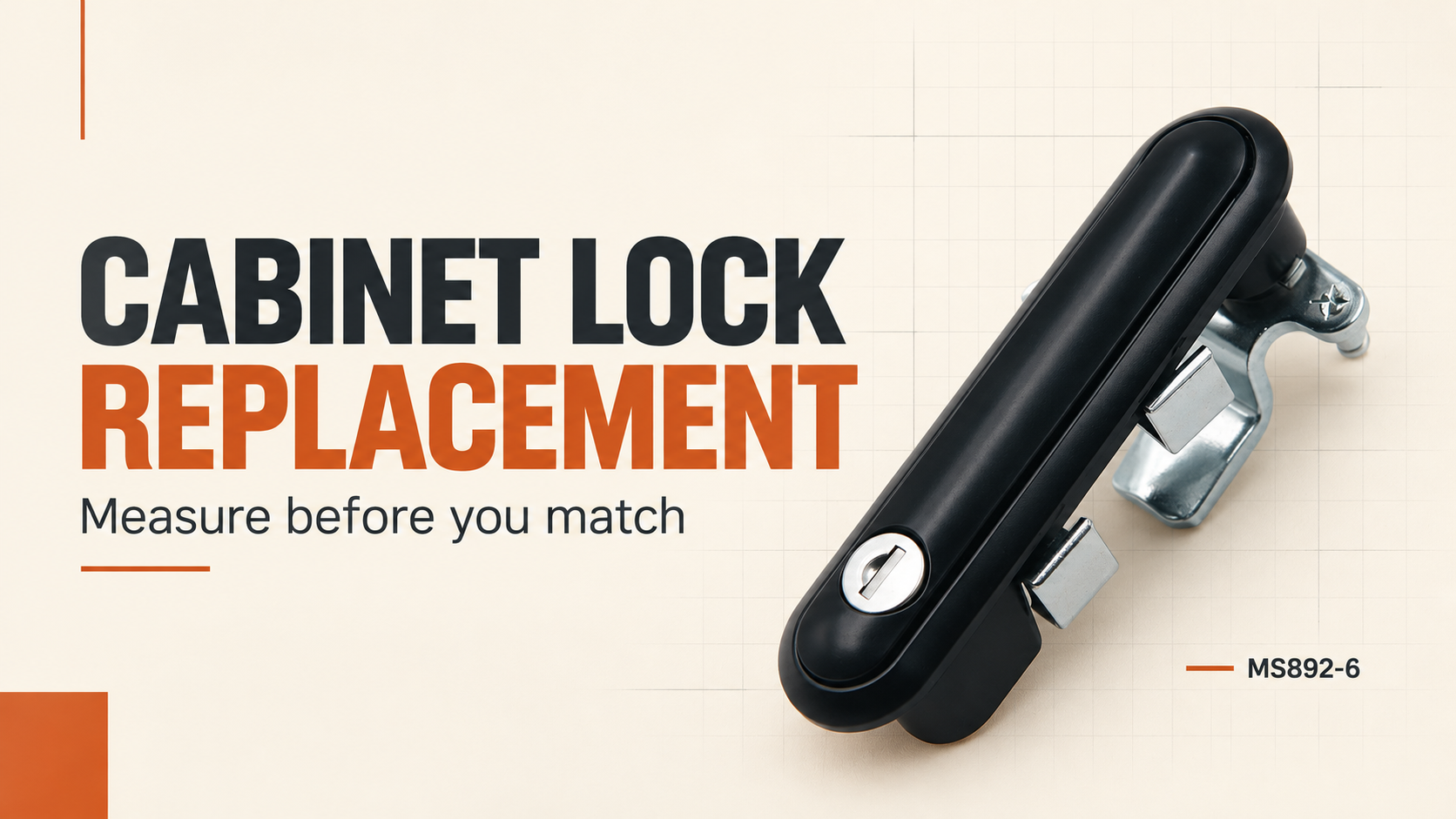
A replacement cabinet lock needs to match the door preparation, mounting stack, frame engagement and operating space. A similar faceplate or handle shape is not enough. Before requesting a replacement, collect the existing model reference, the current drawing and measurements of the installed arrangement.
This checklist helps maintenance buyers and enclosure manufacturers prepare a replacement enquiry. It records what the supplier needs to compare; it does not approve a particular lock for an installation.
Start with the existing assembly
Record every visible marking and photograph both sides of the door, the lock in its open and closed positions, and the contact point at the frame. Include connected rods, cams, brackets and fixing parts where present. A photograph of the front alone leaves the engagement arrangement unresolved.
Distinguish a direct replacement from a redesign. If the original cutout must remain, say so in the enquiry. If panel preparation or frame hardware may change, identify which changes are acceptable. This gives the supplier a useful boundary before comparing alternatives.
1. Record the complete panel cutout
Use the existing enclosure drawing if available, then check that it represents the installed door. Record the opening shape, dimensions, fixing-hole positions and orientation features. Include units and the drawing revision. Do not convert a rough photograph into a precise manufacturing dimension.
For an INMAX reference, the MS892-6 product page links the model with its technical resources. Its Source drawing page provides original files for review. Use these as model-specific references; their presence does not establish interchangeability with an existing lock.
2. Separate panel thickness from the mounting stack
Record the panel thickness and identify any reinforcement, bracket, washer or other component at the mounting location. State which components will stay in place. The supplier should compare the complete proposed stack with the selected model’s mounting arrangement.
Keep panel thickness separate from the dimension between the mounting surface and the frame contact. In Southco’s latch selection reference, grip concerns the latch-to-frame relationship. Use the datum surfaces and terminology on the actual drawing when requesting a comparison.
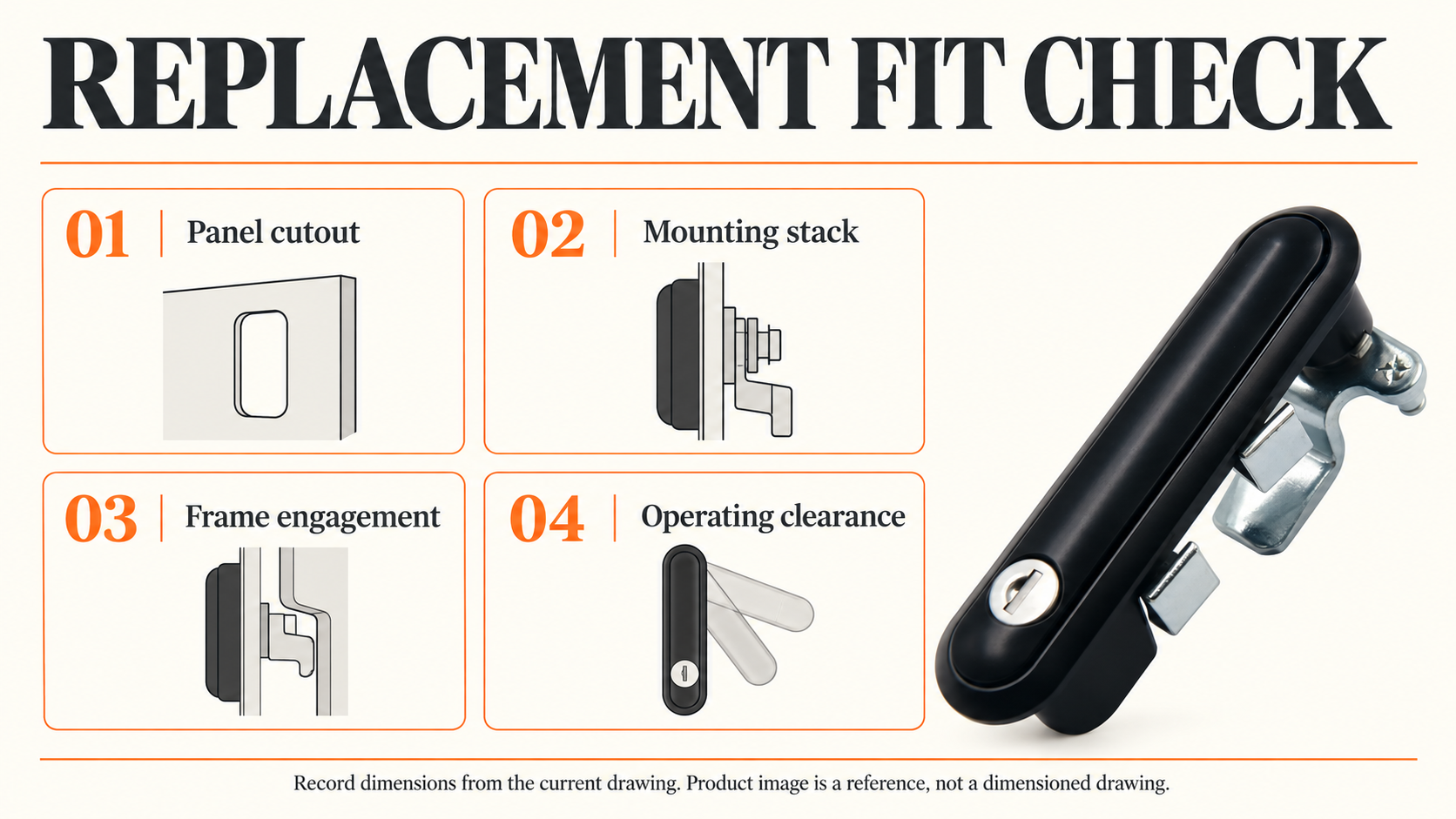
3. Check what engages the frame
Describe the closing action and identify the parts that contact the frame. For a cam arrangement, request confirmation of the supplied cam, its position and its movement. For a linked system, identify the actuator, connections, rods, guides and keepers that belong to the enquiry.
Do not assume that keeping the handle means keeping the same engagement. A replacement proposal should say whether the existing frame hardware can be retained and which components need to change. If the supplier cannot yet confirm a point, keep it on the open-items list.
4. Check movement on both sides of the panel
Record nearby obstructions outside and inside the door. Include the space needed to move the operator, turn the key or tool, and move the rear mechanism through its operating travel. Check the proposed configuration in both the open and closed positions.
A recessed external arrangement does not answer the internal-clearance question. Browse flush locks when that family is relevant, then compare the actual model drawing with the space available behind the panel.
Send a replacement comparison worksheet
| Item | Record from the existing installation | Ask the supplier to confirm |
|---|---|---|
| Identification | Markings, model and photos of both sides | Exact proposed model and configuration |
| Door preparation | Cutout, fixing features, units and revision | Whether preparation changes are needed |
| Mounting | Panel thickness and retained mounting parts | Compatibility with the complete stack |
| Engagement | Frame position and connected hardware | Included parts and retained components |
| Movement | Open/closed positions and nearby obstructions | Required operating envelope |
| Access | Key, tool or hand-operation requirement | Available operator and key arrangement |
Agree the sample check before ordering a batch
Ask for the proposed model reference, current drawing and supply scope in writing. Where a sample is part of your purchasing process, agree what will be checked on the actual door and who will approve the result. Record any deviation rather than treating successful insertion into the cutout as complete approval.
Keep material, finish and application requirements in the comparison. This checklist does not establish a security, environmental or electrical rating. Any required evidence needs to cover the proposed product or assembly and the relevant conditions.
Prepare your INMAX replacement enquiry
Send INMAX the model reference, drawing, photos and quantity, together with the fixed dimensions and the questions still open. State the destination and whether the enquiry is for a sample, a batch or both. Ask for any proposed changes to the existing installation to be identified in the response.
If you are still choosing the mechanism rather than replacing a known assembly, begin with the industrial cabinet lock selection guide.
Prepared by INMAX from its public product resources and the cited latch-selection reference. Product-based illustrations are editorial aids, not installation drawings or evidence of a tested replacement.