
An EPDM sealing profile enquiry needs a section drawing with the finished mounting edge and the opposing door face marked. For an enclosure door gasket, measure the gap with the door in its intended closed position. Send a corner photo as well as a straight section so the supplier can see where the profile has to bend and where its ends meet. If you are evaluating the MFT-003 EPDM sealing profile, mark its proposed orientation on that section drawing.
Jump to buyer FAQs / Product pages and sources
This guide helps enclosure buyers prepare those documents for a quotation. It does not prescribe a profile size, compression percentage or enclosure protection rating.
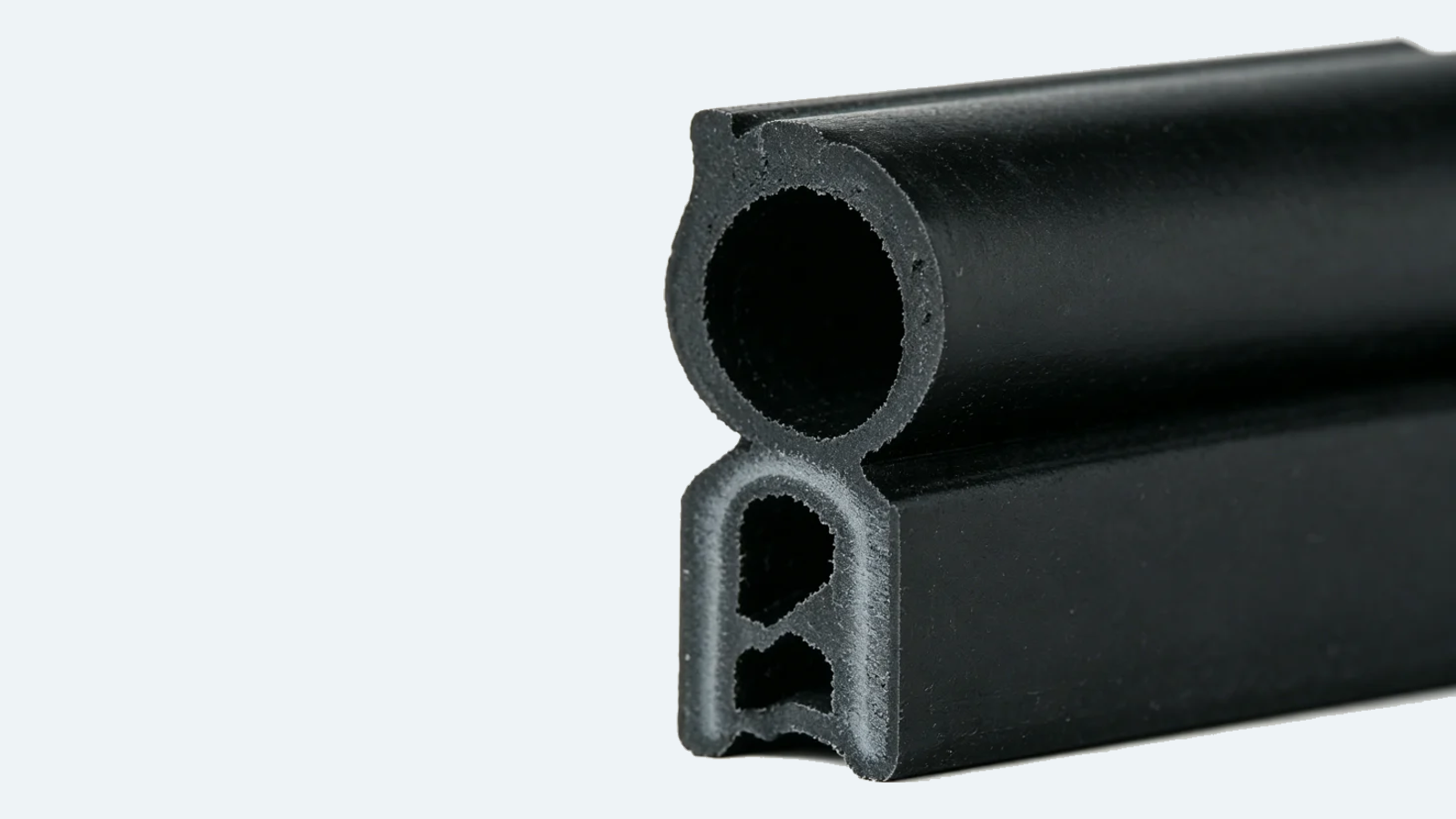
Identify the whole section
Start with the complete model reference and the current section drawing. Mark the intended orientation on an enclosure detail so that the supplier can distinguish the mounting side from the sealing contact. If you are replacing an existing profile, provide a clear photograph of its end section and identify which document represents it.
The INMAX MFT-003 page describes a black EPDM sealing strip with a steel carrier and directs buyers to the dimensional drawing. Its Source record holds the original files. Read the product record and drawing together; do not infer the section dimensions from the catalogue photograph.
Describe the mounting edge separately from the closed gap
Record the edge or channel on which the proposed profile will mount, including the relevant drawing dimensions and units. On a separate joint view, show the mating surface and the closed position. If the gap varies around the opening, record where the measurements apply rather than replacing them with a single convenient value.
These details answer different questions. The mounting information identifies how the profile is intended to be retained. The joint view gives the supplier a basis for reviewing the proposed sealing arrangement. Ask for the suitable configuration and any unresolved constraints to be identified in the response.
Mark the bulb size, its position on the carrier and the flange thickness on the section drawing. Ask the supplier to confirm all three for the proposed INMAX profile.
Show the corners, route and joint location
A straight section image leaves the route around the opening unresolved. Include a plan view of the perimeter and mark the corner geometry, changes of direction and intended start/end joint. Ask the supplier to flag any route detail that needs review for the selected profile.
State the form of supply you want quoted: continuous length, specified cut lengths or another requested arrangement. Ask what can be supplied for the chosen model. If joining or corner preparation is part of the request, keep it as a named quotation item and confirm who will perform it.
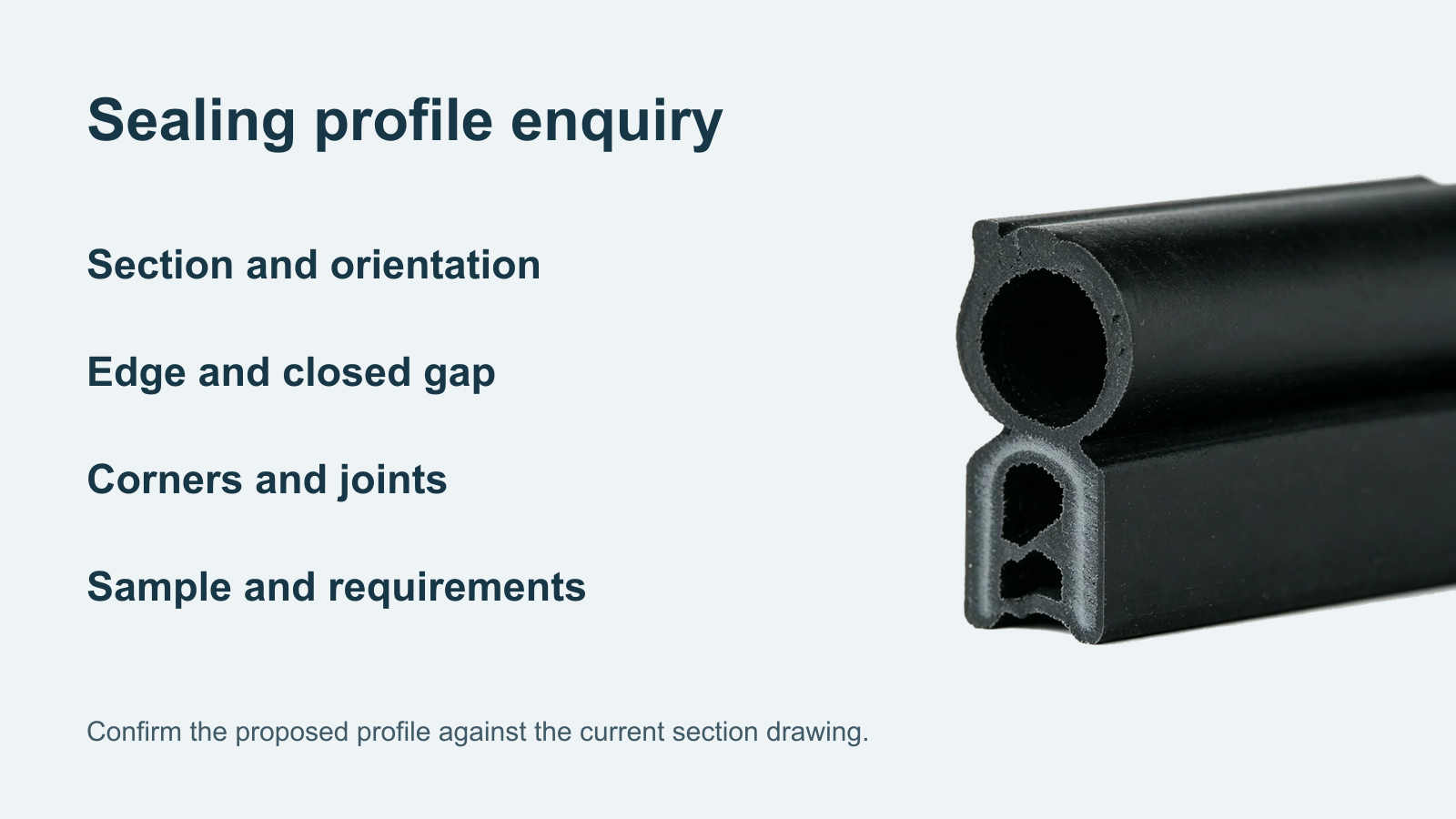
Keep material identity and special requirements distinct
Copy the requested model and material description accurately, then list any additional project requirement separately. If you need a particular finish, material document or specified test evidence, name the requested document and ask the supplier to confirm which supplied configuration it covers.
The MFT-003 record mentions versions that can be customized to customer requirements. That statement is a reason to discuss the exact requirement with INMAX; it is not evidence that an unspecified version has a particular fire, insulation or conductivity classification. Request written confirmation and the applicable supporting information before treating such a requirement as resolved.
Use this sealing-profile enquiry worksheet
| Information | What the buyer should provide | What the supplier should confirm |
|---|---|---|
| Section reference | Model, original drawing and revision if available | Current section and proposed supplied configuration |
| Orientation and mounting | Joint view, mounting edge or channel, units | Open questions about the proposed mounting arrangement |
| Closed joint | Mating surfaces and recorded gap conditions | Information still needed to review the selected profile |
| Perimeter route | Corner geometry and intended joint position | Route limitations or preparation to discuss |
| Supply form | Requested lengths, quantities and sample scope | Available form of supply and included preparation |
| Project documents | Named material or test-document requirement | Available evidence and the exact product scope covered |
For a mixed order, give each profile its own line. A total length across several section references does not tell the supplier how much of each model you need. Keep estimated repeat demand separate from the quantity currently requested.
Give the sample a defined purpose
Ask for a sample that can be traced to the proposed model and configuration. Keep its identification with the drawing and quotation. List the questions your team will review on the actual enclosure and assign the relevant checks to the person responsible for the design.
A sample review and any required enclosure test are separate stages. This article does not establish an IP rating or other performance result. Record any change made after the sample review and ask whether it changes the profile, documentation or quotation basis.
EPDM sealing profile trial record for a cabinet perimeter
Use one row per location on the actual door. Identify the sample and matching section drawing at the top of the record so the straight run, corner and joint can be compared later.
| Place on the perimeter | Record on the trial sheet | Question to resolve |
|---|---|---|
| Straight run | Mounting edge thickness, closed gap and the face the seal contacts. Add units and the door ID. | Does the installed profile seat in the orientation shown on the section? |
| Tightest corner | A photo before closing and after reopening, with the turn direction marked. | Does the mounting section stay seated as it follows the corner? |
| End joint | Mark the joint on the perimeter drawing and photograph the two ends in the closed-door position. | Who supplies the cut lengths and who makes the joint on the approved version? |
Prepare an INMAX sealing-profile request
Browse the INMAX sealing profile range, then send your section enquiry with the model or drawing, mounting and joint views, perimeter details, required lengths and destination. Put the open questions beside the relevant drawing rather than leaving the supplier to infer them from a photograph.
When quotations arrive, use the RFQ comparison workflow for scope, quantity basis, documents and commercial terms. Apply the comparison to the sealing-profile lines actually offered; the lock examples in that guide are not sealing specifications.
Prepared by INMAX from its public sealing-profile records and the cited manufacturer reference. The worksheet organizes purchasing information and does not replace model-specific technical confirmation or enclosure testing.
Product pages and technical references
- INMAX product pages
- MFT-003 EPDM sealing profile
EPDM sealing profile enquiry FAQ
Is the free height of a seal enough to choose an enclosure door gasket?
Free height describes the loose section. Add the installed closed gap, the direction the door approaches and where the mounting section seats. Ask for the working deflection of the specific profile on offer.
What if my flange thickness changes at a seam?
Record both the straight edge and the thickest finished seam. Identify both on the section drawing and test the sample at the transition. See how a steel-carrier sealing strip grips a flange.
What should the supplier identify on the EPDM sample?
Ask for the model, section option, material description and the drawing reference supplied with the sample. If a particular material property is required, name the property and request evidence for that version.